


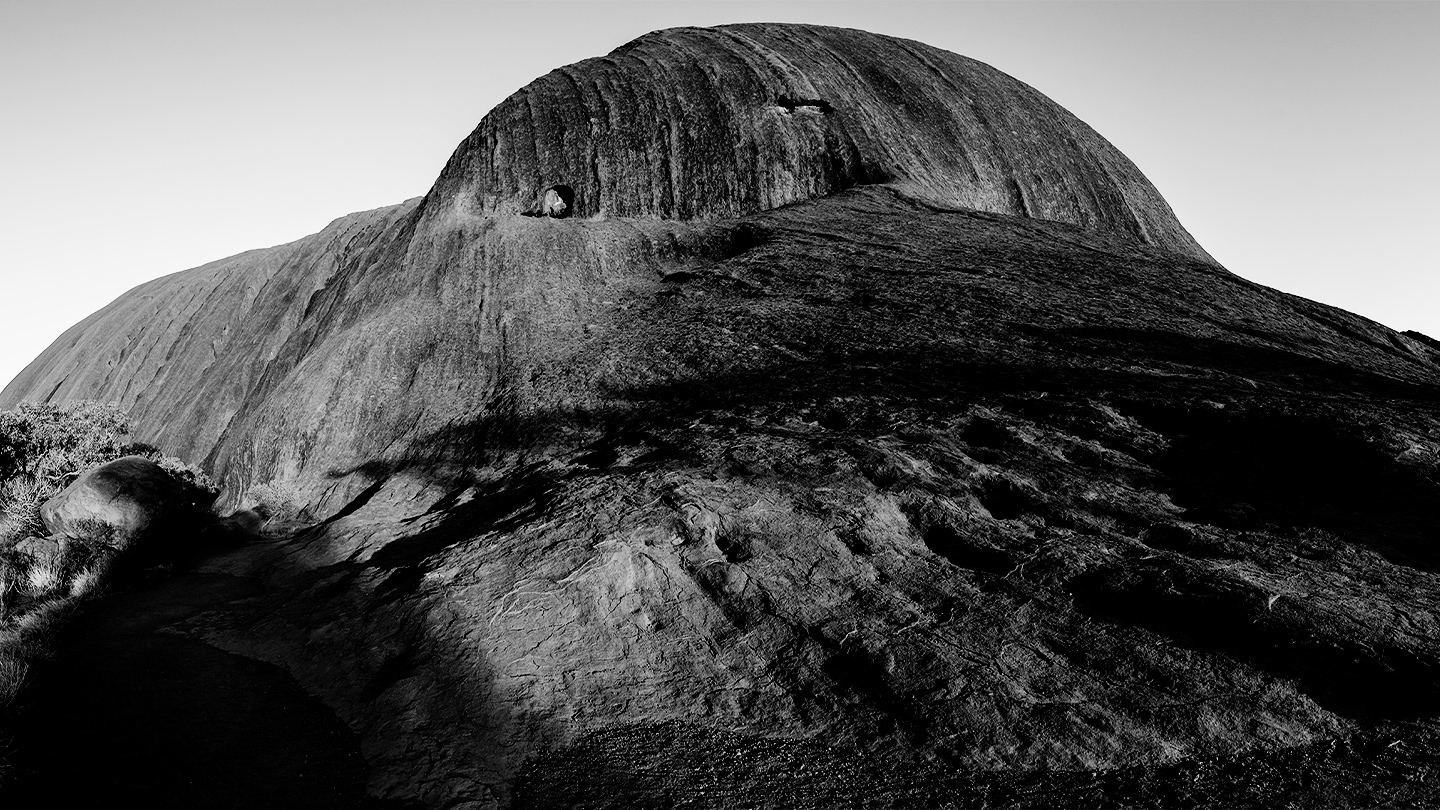
Aboriginal land claims 1983-present
One purpose of the Aboriginal Land Rights Act 1983 is to provide land rights for Aboriginal people in NSW. The Act creates a system for Aboriginal Land Councils to claim Crown land. If the land meets certain criteria, the Minister for Crown Lands must grant the land to the Aboriginal Land Council.
The Aboriginal Land Rights Act 1983 (NSW) () began in 1983 (see SUB0531). The Government said it was ‘the most fundamental initiative to be taken for the regeneration of Aboriginal culture and dignity, and at the same time laying the basis for a self-reliant and more secure economic future for our continent’s Aboriginal custodians’ (, see also ).
Aboriginal land claims and land rights
The Act recognises that ‘land and waters set aside for Aboriginal persons has been progressively reduced without compensation’ due to government decisions (, , ). It includes a system to claim land which was designed to be ‘simple, quick and inexpensive’ and ‘go some way to redress the injustice of dispossession’ ().
As of 2024, the Act has resulted in 4741 land claims being fully granted and 1050 claims being part-granted (). It has been described by High Court Justice Kirby as ‘little short of revolutionary ().
However, the administering of land claims has been criticised for unacceptable delays (see SUB0239) and government decisions that have frustrated the remedial and beneficial intent of the law (see SUB0240). As of 2024, ‘less than a fraction of 1 per cent of the land of NSW has been returned to Aboriginal people’ ().
What is a land claim?
A land claim is claim for land that is made in writing and describes the land claimed (, ). The Registrar of the Aboriginal Land Rights Act has a template land claim form and fact sheet (, ).
Who can make a claim?
Aboriginal land claims can be made by the NSW Aboriginal Land Council (on its own behalf or on behalf of a Local Aboriginal Land Council).
Claims can also be made by a Local Aboriginal Land Council for land within its area or, with the approval of the Registrar, outside its area () (see SUB0244 for more about the NSW Aboriginal Land Council and SUB0245 for more about Local Aboriginal Land Councils).
How are claims made?
Aboriginal land claims are lodged with the Registrar of the Aboriginal Land Rights Act who keeps a register of land claims (). The Registrar can refuse to register the claim in certain circumstances but otherwise refers the claim to the Crown Lands Minister (, ).
What land can be granted?
When the Act began, ‘Claimable Crown lands’ included ‘lands vested in Her Majesty’ (or the State of NSW) () that:
- are able to be lawfully sold or leased, or are reserved or dedicated for any purpose,
- are not lawfully used or occupied, and
- are not needed, nor likely to be needed, for an essential public purpose ().
The Act also allowed land that was part of a travelling stock reserve to be granted in certain circumstances ().
In 1986, the Act was changed so that Aboriginal land claims could not be granted on land where the Minister was of the opinion that the land was needed, or likely to be needed, as residential lands when the claim was made (). The Government said this was because land ‘earmarked for residential development … is a scarce resource and access to it should be through normal channels in accordance with Government policy’ ().
Following the Mabo decision and the commencement of the Native Title Act 1993 (Cth), the Aboriginal Land Rights Act was amended in 1994. These changes meant that Aboriginal land claims could not be granted if, at the date of claim, the land was the subject of a registered native title claim or a determination that native title exists (, ).
In 1996, the Act was changed so that land that is needed, or likely to be needed, for the essential public purpose of nature conservation can be granted if the Land Council enters into a lease back arrangement under Part 4A of the National Parks and Wildlife Act 1974 () (see SUB0450 and SUB0491 for more about these arrangements).
If the land claimed meets the definition of ‘claimable Crown lands’ in the Aboriginal Land Rights Act on the date the claim is made, the Minister must grant the land claim ()
While the Act follows the recommendation of a NSW Parliamentary Inquiry that the scope of claimable land go beyond 'traditional areas only' (), the land available for claim has nonetheless been criticised by many as being far less than had been recommended by the Parliamentary Inquiry (see SUB0531).
Land claim appeals
An Aboriginal Land Council can appeal a refusal of an Aboriginal Land Claim to the Land and Environment Court (). If the Government fails to satisfy the Court that the lands are not claimable, the Court may order the land claimed to be transferred to the relevant Aboriginal Land Council ().
For more about what land has been granted, and the Court’s consideration of the land claims parts of the Act, see SUB0240.
Granted land
When the land is granted, Aboriginal Land Councils are generally granted a freehold title to the land (, ). However, there can be limitations that impact what Land Councils can do with the land, including limited title and a requirement to obtain a native title determination over the land. See SUB0333 for more about this.
Aboriginal Land Agreements
In 2014, a new section 36AA was inserted which sets out a process for the negotiation of Aboriginal Land Agreements, which are agreements about land claims (). This was partly in response to the ongoing backlog of Aboriginal land claims (see SUB0239 for more about the backlog and how Aboriginal Land Agreements work).
Changes to Crown lands law
On 17 March 2026, the Government introduced a Bill into Parliament that would change the Crown Lands Management Act. These changes would have allowed the Minister to ‘declare a holding over Crown land to be valid’. They would have also meant that the granting of a lease under a Crown Land Act constitutes a lawful use under the Aboriginal Land Rights Act, meaning that any land under lease count not be granted, even if the land was not used or occupied (). This was said to ‘appear to overturn’ a 2025 High Court decision (, ).
Aboriginal Land Councils and the Law Society of NSW were strongly opposed to these changes (, ). The Parliament’s Legislation Review Committee said the amendments would ‘effectively extinguish’ Aboriginal Land Council claims where the land is subject to a lease ().
On 16 September 2026, the Parliament passed an revised version of the Bill. It removed the proposed law that would mean that a lease alone constitutes a lawful use under the Aboriginal Land Rights Act. There is still a process for the Minister to retrospectively validate a holding Crown land to be valid, but the Minister must consider the impact on existing Aboriginal land claims and follow a consultation process before making the declaration ().
The law and policy in this subject is accurate as of 1 July 2022.